
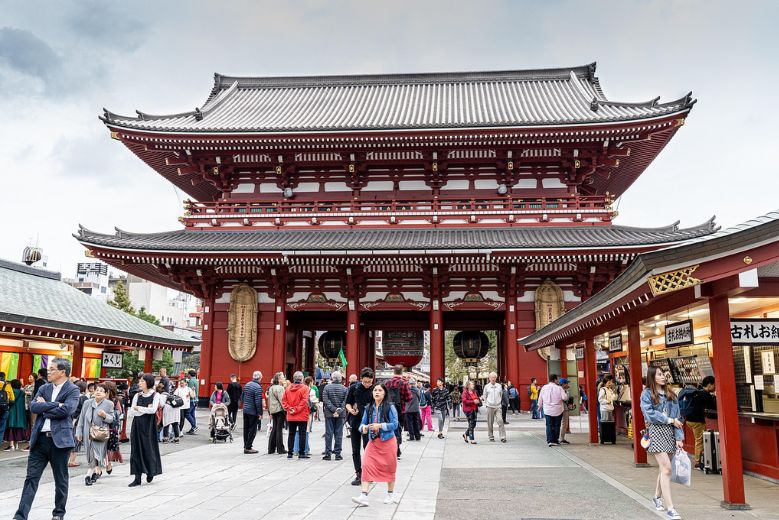
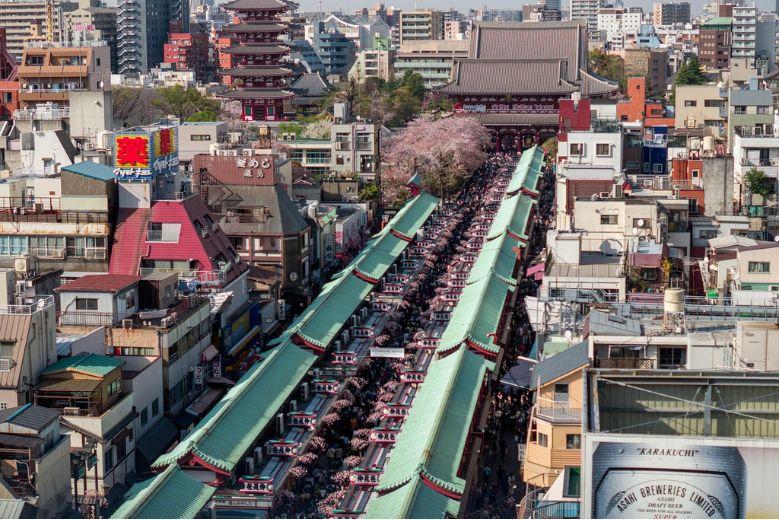
Senso-ji, also known as Asakusa Kannon Temple, is a famous Buddhist temple located in the Asakusa district of Tokyo. It is one of Tokyo’s oldest and most significant temples, attracting millions of visitors each year. Senso-ji is a religious site and a cultural landmark that showcases traditional Japanese architecture, history, and spirituality.
The approach to Senso-ji begins at the Kaminarimon, which translates to “Thunder Gate.” This impressive entrance gate features a massive red lantern and is adorned with two fierce-looking statues: the gods of wind and thunder.
Passing through the gate leads you onto Nakamise Shopping Street, a bustling pedestrian street lined with shops selling traditional snacks, souvenirs, and crafts. It offers a vibrant atmosphere and a chance to immerse yourself in the local culture.
Legend has it that Senso-ji was founded in 628 when two fishermen discovered a golden statue of the Kannon, the Buddhist goddess of mercy, in the nearby Sumida River. The temple was then built to enshrine the statue, and it has since become a revered pilgrimage site for Buddhists and a popular tourist destination.
Following through Nakamise Street, you will reach the Hōzōmon Gate, the main entrance to the temple grounds. The Hōzōmon Gate is characterized by its massive size and impressive architectural details. Inside the gate, you will find a five-story pagoda, various halls, and the main hall, where the Kannon statue is enshrined.
Visitors can explore the temple grounds, which include beautiful gardens, smaller shrines, and serene courtyards. The atmosphere is tranquil and filled with the scent of incense. Many visitors participate in traditional rituals, such as washing their hands and mouth at the chozuya (purification fountain) before approaching the main hall to offer prayers and make offerings.
Throughout the year, the temple hosts numerous events and festivals, including the Sanja Matsuri, one of Tokyo’s largest and most lively festivals. During festivals, the temple and its surroundings come alive with processions, performances, and traditional music and dance.
Explore Tokyo
Top Attractions
Hours and Admission
- Hours: Temple: 6:00am-5:00pm (from 6:30am during Oct-Mar) Temple Grounds 24/7
- Free
- Average Time Spent: 45 Minutes - 1.5 Hours
- Official Website
Accessing Senso-Ji (Asakusa Temple)
Sensoji Temple is located in the northern region of Tokyo, and can easily be accessed by Asakusa Station from many of the major stations around Tokyo.
From Tokyo Station, you can take the Tokyo Metro (departing from Nihombashi Station, down the road a couple blocks from the east exit of Tokyo Station) on the Ginza Line for a direct route to Asakusa, costing 170JPY one way.
Where to Stay
lyf Ginza Tokyo
Highly Recommended
The lyf Ginza Tokyo is a hip, modern hotel with funky wall art and artistic rooms. The rooms are well laid out, and designed with travellers in mind, often offering great places to ample room to store luggage - a true luxury in Tokyo. For hotels near Tokyo Station, the Lyf Ginza Tokyo is priced more affordably than other nearby hotels.
APA Hotel Akihabara Ekikita
Perfect for solo travellers
Modern and fresh economy hotel with all the common amenities, centrally located only a few minutes from JR Akihabara Station.
Hotel Gracery Shinjuku
Highly Rated
Popular and famous Hotel in Shinjuku, with rooms overlooking the Shinjuku Godzilla Head statue.
Explore more in Tokyo Prefecture
12 FREE things to do in Tokyo
Enjoying Tokyo on a budget
Akihabara
A district famous for technology, pop culture, and entertainment
Ameyoko
The "Candy store alley" market

Cherry Blossoms Spots in Tokyo
Top spots in Tokyo to get that Insta worthy pic
Ginza
Tokyo's Luxury Shopping District
Hachiko Statue
An iconic statue in Shibuya
