
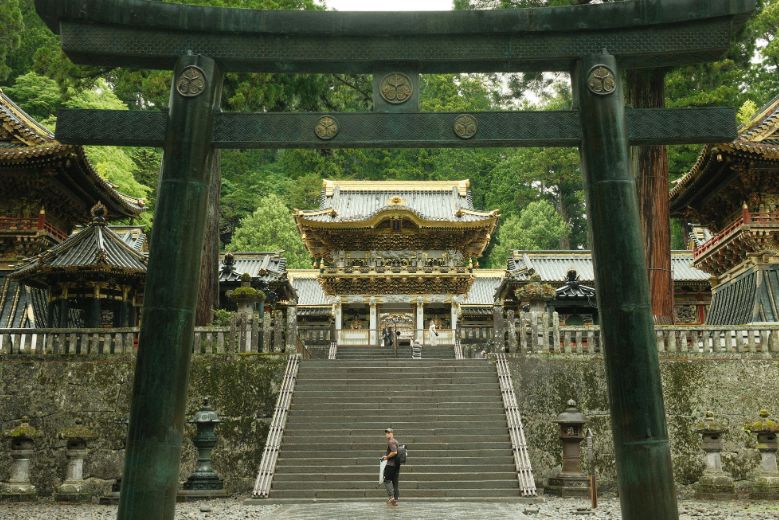
Tōshogū Shrine (東照宮) is one of Japan’s most opulent and historically significant shrines, located in Nikko, Tochigi Prefecture. Set among the forested hills of the Nikko area, the shrine is renowned for its elaborate architecture, intricate wood carvings and richly decorated buildings.
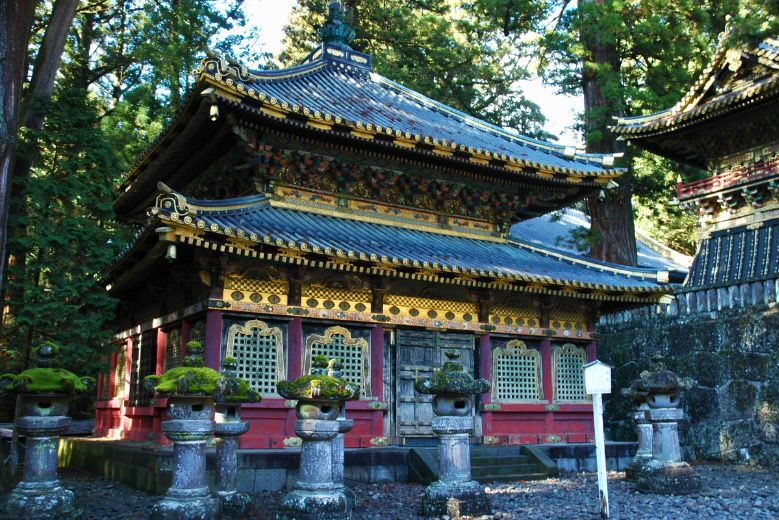
It is the final resting place of Tokugawa Ieyasu, the founder of the Tokugawa Shogunate, which ruled Japan for over 250 years. Unlike many traditional shrines with minimalist aesthetics, Toshogu Shrine is famous for its lavish carvings, vibrant colors, and intricate gold leaf details, making it one of Japan’s most visually stunning religious sites.
Tokugawa Ieyasu played a pivotal role in Japanese history by helping bring an end to a prolonged period of civil conflict and establishing the political foundations of the Edo Period. After his death, his remains were initially interred at Kunozan Toshogu in Shizuoka Prefecture before being transferred to Nikko, where Toshogu Shrine was established in 1617.
Although Toshogu is a Shinto shrine, its historical setting reflects the close relationship between Shinto and Buddhism in Japan before the two religions were formally separated during the Meiji Period (1868–1912). Several Buddhist structures and temples can be found in the surrounding area, including Rinnoji Temple and Futarasan Shrine, which together form the wider religious heritage of Nikko.
Highlights
The shrine complex contains numerous buildings, gates and decorative features, many of which are designated National Treasures or Important Cultural Properties. Visitors should allow sufficient time to explore the grounds, as some of the most notable details are found in the carvings and ornamentation above and around the main entrances.
- Yomeimon Gate (陽明門) – The most famous structure in Tōshogū, this intricately decorated gate is covered in over 500 carvings of mythical creatures, sages, and animals. It is sometimes called the “Sunset Gate” because visitors can admire its beauty for an entire day.
- Three Wise Monkeys (三猿) – A famous wood carving on the Sacred Stables depicting “See no evil, speak no evil, hear no evil,” representing Buddhist teachings on moral conduct.
- Sleeping Cat (眠り猫, Nemuri Neko) – A tiny yet well-known carving above a doorway, symbolizing peace and protection.
- Ieyasu’s Mausoleum – A short but steep climb leads to the final resting place of Tokugawa Ieyasu, set deep in the forest behind the shrine.
- Karamon Gate (唐門) – Another elaborately decorated gate featuring white carvings of Chinese-inspired motifs.
📍 Location: Nikko, Tochigi Prefecture
🏯 Significance: The lavish mausoleum of Tokugawa Ieyasu, founder of the Tokugawa Shogunate (ruled Japan for 250+ years).
🎨 Style: Unlike minimalist shrines, Tōshōgū is famous for gold details, vibrant colors, and intricate carvings.
🌅 Yōmeimon Gate (陽明門) – The “Sunset Gate,” adorned with 500+ elaborate carvings of mythical creatures and sages.
🐵 Three Wise Monkeys (三猿) – The famous “See no evil, speak no evil, hear no evil” carving, teaching Buddhist morality.
🐱 Sleeping Cat (眠り猫) – A small but iconic carving symbolizing peace and protection.
⛰️ Ieyasu’s Mausoleum – A steep climb leads to the final resting place of Tokugawa Ieyasu, deep in the forest.
🚪 Karamon Gate (唐門) – A beautifully carved white gate with intricate Chinese-inspired motifs.
A UNESCO World Heritage Site, Tōshōgū Shrine is a must-visit for history, culture, and architecture lovers! 🏯✨

Kegon Falls
One of Japan's most famous waterfalls

Lake Chuzenji
Scenic and relaxing lake town

Toshogu Shrine
One of Japan’s most opulent and historically significant shrines

Akechidaira Ropeway
Panoramic Views of Lake Chuzenji, Kegon Falls, and more

Mt. Nantai
Popular hiking mountain in Nikko

Chuzenji Kanaya Hotel
A historic lakeside resort with onsen baths and stunning views.

Nikko Station Hotel Classic
Popular historic western-style hotel in the heart of Nikko, perfectly located for exploring Nikko.

Akechidaira Ropeway
Panoramic Views of Lake Chuzenji, Kegon Falls, and more

Kanmangafuchi Abyss
Scenic riverside park with numerous stone statues

Kegon Falls
One of Japan's most famous waterfalls

Kirifuri Waterfalls
Two-tiered waterfall surrounded by beautiful forest

Lake Chuzenji
Scenic and relaxing lake town

Mt. Nantai
Popular hiking mountain in Nikko